
 English
 русский

Steam Mop, Floor Washer and Steam Mop and Sweeper: Which Floor Cleaner Should You Source For most hard-floor households, a steam mop is the right starting product, a multifunctional steam mop suits users who want one machine for several jobs, and a floor washer suits homes where wet spills and sticky messes are the da...
READ MORE
HEPA Pet Air Purifier Supplier
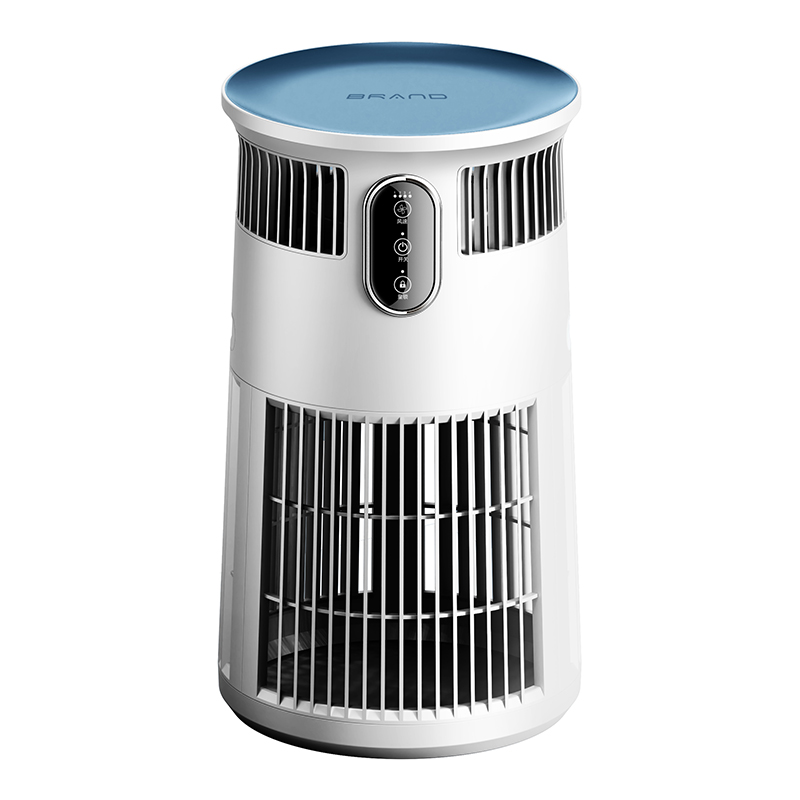
Introduction to Pet Air Purifier
A pet air purifier is a specialized air cleaning device engineered to address the unique air quality challenges of pet ownership, including pet dander, hair, odors, and allergens that regular air purifiers may not handle effectively. Equipped with pet-specific filtration systems, these devices work continuously to improve indoor air quality in homes and businesses with animals.
Pet air purifiers typically feature multi-stage filtration: a pre-filter that captures floating pet hair and large fur particles, a True HEPA filter that traps microscopic dander and allergen particles as small as 0.3 microns, and an enhanced activated carbon filter specifically formulated to neutralize pet odors from urine, saliva, and wet fur. Many models include additional features such as ionizers, auto mode with air quality sensors, and quiet operation modes that won't startle or stress pets. By removing airborne pet allergens and odors at the source, these purifiers create a fresher, healthier environment for both pets and their owners.
The pet air purifier delivers significant benefits across numerous environments: it is essential for clean household cleaning and healthy home cleaning with pets, valuable for pet-friendly office cleaning, important for pet-welcoming hotel cleaning in the hospitality industry, critical for veterinary hospital cleaning in healthcare facilities, and effective for commercial cleaning services managing pet-friendly spaces. It also supports hygiene in childcare and daycare facilities with therapy animals, pet-friendly restaurant and food service cleaning, animal-friendly gym and fitness center maintenance, and educational school and education facility cleaning with classroom pets, providing a reliable solution for reducing pet-related allergens and maintaining fresh, odor-free air quality.
Ningbo Yuexiang Electric Appliance Co., Ltd.
Founded in 2008, Ningbo Yuexiang Electric Appliance Co., Ltd. is specializing in home cleaning appliances for both oversea and home markets. Our company is located in Wanyang (Henghe) Entrepreneurial City, Henghe Town, Cixi City, Ningbo, China. We have our own mould making shop supported by experienced technical engineers, injection machines, products assembly lines.
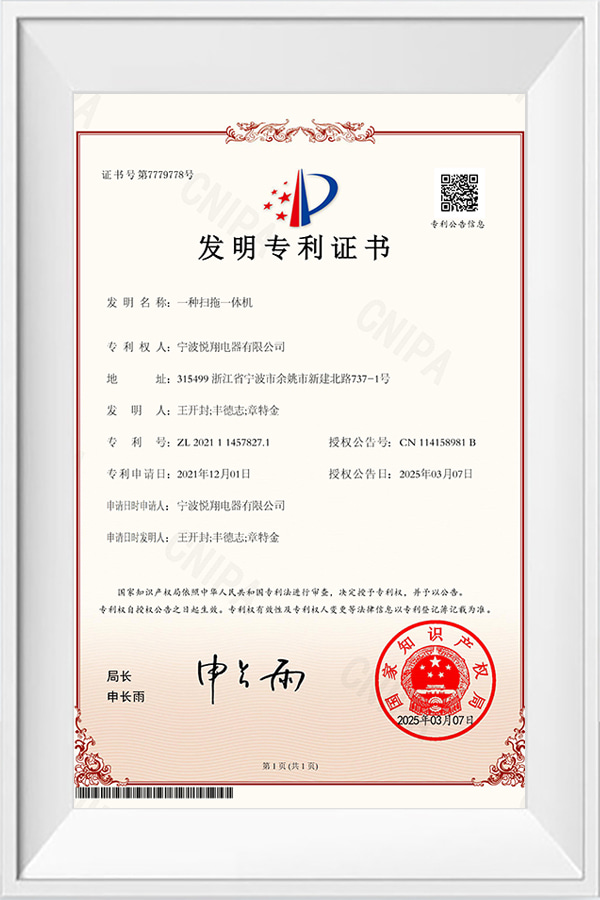
Ningbo Yuexiang Electric Appliance Co., Ltd. is a China HEPA Pet Air Purifier Supplierand OEM/ODM HEPA Pet Air Purifier Factory, we are mainly manufacturing Steam Mop, Steam Cleaner, Steam and Sweeper, Pet Electrical Appliances, Neck Massager, etc. With the mission to deliver high quality products, good services with competitive prices, we have a wide range of customers all over the world, Products are exported to Europe, the United States and Southeast Asia, more than 30 countries and regions. High praise from our customers are received. Our products have passed concerned safety certification as GS, CE, Rohs, FCC, UL, PSE, SAA etc.
Owing to high-quality products and superb services, we have been well accepted by our business partners. We are looking forward to having you as our enhanced customers and will appreciate your inquires. Your OEM and ODM are welcome always.
-
-
China Multifunctional Steam Mop Factory: A Buyer's Guide to Steam, Floor and Pet Cleaning Products Picture a distributor who needs one mixed container: a multifunctional steam mop, a steam mop and sweeper combo, a portable steam cleaner, a pet hair vacuum and a mini neck massager. Sourcing those five items from five f...
READ MORE -
China Steam Mop and Steam Cleaner Supplier: What Buyers Should Decide First Imagine a retailer building a home care catalogue who asks three factories for samples of a steam mop, a handheld steam cleaner and a neck massager. Three replies arrive in three different formats, with different voltage notes, different acces...
READ MORE
1. What a Pet Air Purifier Is
A pet air purifier is a room air cleaner built for homes where animals live. A fan draws room air through a stack of filters, and the cleaned air returns to the room. The design pays extra attention to the things pets add to indoor air: loose hair, dander, litter dust and household odors. Owners place the unit near sleeping areas, play areas or litter boxes, where these particles collect.
Buyers who search for a China pet air purifier factory usually look for a supplier that understands these load sources. The product needs a washable pre-filter for hair, a fine filter for small particles, an odor stage and a fan that stays quiet around animals. This guide explains the filter stages, airflow and noise trade-offs, room coverage classes and project planning for wholesale and ODM programs.
(1) Sources of Airborne Load in a Pet Home
The rose chart uses an illustrative index and does not report measurement data. Each wedge stands for one source, and a longer wedge means a heavier share of the load in a typical pet home. Pet hair and dander take the longest wedge, since animals shed all year and spread fine particles as they move. Household dust follows, because it settles on the same fabrics where pets rest. Litter box dust, cooking odor and outdoor pollen add smaller shares. The chart explains why a pet-focused purifier needs a strong pre-filter, a fine filter and an odor stage, and not only one filter type.
2. Working Principle and Filter Stages
Air enters through an intake grille and passes through filters in sequence. The first stage is a coarse pre-filter that catches hair and large dust. The second stage is a HEPA-type filter, a dense fiber layer built to hold fine particles. The third stage is an activated carbon layer that adsorbs odor molecules. A fan pushes the air through the stack and out of the top or the sides.
(1) How the Load Shrinks Across Stages
The band chart shows an illustrative path for the airborne load, and the values are planning figures and not test results. The left band stands for the load entering the unit, and the dark vertical bars mark the two filter stages. The pre-filter removes the larger share first, mostly hair and coarse dust, which is why it is the part owners wash most often. The HEPA-type filter then removes most of what remains, including fine dander. The thin band on the right shows what leaves the unit. Splitting the work between stages keeps the fine filter from clogging early and helps the whole stack last longer between replacements.
| Stage | Target | Care Habit |
|---|---|---|
| Pre-filter | Hair and coarse dust | Vacuum or rinse regularly |
| HEPA-type filter | Fine particles and dander | Replace on a set cycle |
| Activated carbon layer | Household and litter odors | Replace when odor control fades |
3. Airflow, Fan Speed and Noise
Fan speed links airflow and noise. Higher speeds move more air through the filters but also raise sound. Many pets react to loud or high-pitched sounds, so a purifier for pet homes needs a quiet low setting and a smooth step between speeds. The step chart below shows an illustrative relationship across five speed settings.
The step chart is an illustrative planning view and not a sound test. Each flat segment shows one speed setting, and each vertical step shows the jump to the next setting. The airflow line climbs in even steps, which gives the user a clear choice between gentle and strong cleaning. The noise line stays lower than airflow at first and rises faster at the top settings, since fan blades create more turbulence at high speed. This pattern explains why a sleep mode and a low mode matter in pet homes, where the unit runs for many hours. A factory can tune blade shape, housing and motor mounting to flatten the noise curve at the upper end.
4. Types and Room Coverage Classes
Pet air purifiers come in several sizes, from small units for a bedside or a pet bed corner to large units for open-plan living areas. Size relates to fan power, filter area and housing volume. Buyers who plan a range often cover three or four coverage classes so that each customer finds a fitting unit.
The range chart shows illustrative planning ranges for room area, and each manufacturer sets its own ratings from test records. Each bar spans the room sizes a size class is intended for, and neighboring bars overlap on purpose. The overlap lets a buyer place two classes in the same room size and compare them by noise, filter size and look. Compact units suit bedrooms, pet corners and small offices. Large and extended units suit living rooms and open areas, where air needs more fan power to turn over. Retailers can use the chart to arrange shelf signs and product pages by room size.
| Format | Best For | Strength | Point to Consider |
|---|---|---|---|
| Compact tabletop | Bedside and pet corner | Small body, quiet low mode | Smaller room coverage |
| Standard floor unit | Bedrooms and living rooms | Balanced size and airflow | Needs floor space |
| Large tower unit | Open-plan areas | Larger filter area | Higher fan power needed |
5. Application Scenarios and Selection Points
Pet air purifiers serve family homes with dogs or cats, rental apartments, pet boarding rooms, grooming shops and veterinary waiting areas. In each of these places the unit runs for many hours, so noise, filter access and replacement planning shape the user experience.
(1) Selection Checklist
- Identify the typical room size and the number of pets in the target market.
- Choose the filter stack, including pre-filter, HEPA-type filter and carbon layer.
- Review fan speeds, the sleep mode and the noise profile at each speed.
- Check filter access, replacement cycle and the filter reminder design.
- Confirm voltage, plug type, manual language and carton format for the destination.
(2) Design Details That Suit Pet Homes
- A washable pre-filter that is easy to remove and reinstall
- A housing that resists tipping and has a child lock on the control panel
- A display that can dim or turn off at night
- A cord path that keeps the cable out of reach of animals
6. Production at a Ningbo Home Appliance Factory
Ningbo Yuexiang Electric Appliance Co., Ltd. was founded in 2008 and specializes in home cleaning appliances for overseas and domestic markets. The factory is located in Wanyang (Henghe) Entrepreneurial City, Henghe Town, Cixi City, Ningbo. Its main products include steam mops, steam cleaners, steam and sweeper models, pet electrical appliances and neck massagers, shipped to Europe, the United States and Southeast Asia across more than 30 countries and regions.
Pet electrical appliances are part of this regular range, and the team works with motors, airflow parts and plastic housings every day. Yuexiang operates its own mould making shop with experienced technical engineers, together with injection machines and product assembly lines. Housing shells, filter frames, grilles and control panels are plastic parts, so in-house tooling and molding give a project team direct control over fit and finish. For buyers who look for a China pet air purifier ODM partner, air purifier requirements can be discussed through the ODM and OEM inquiry channel.
(1) What In-House Tooling Offers
When a buyer asks for a new grille pattern, a different filter door or a changed handle, the mould team can adjust the tool without waiting for an outside shop. Trial parts come from injection machines on site, and engineers can test fit on the same line. This short loop is useful for private label programs, where small structural changes are common.
7. Wholesale and ODM Project Planning
Distributors who plan China HEPA pet air purifier wholesale programs usually think about range first. A common range pairs a compact unit with one or two larger units, each with a matching replacement filter set. Planning the filter supply along with the unit helps the brand keep customers after the first purchase, since owners need new filters on a regular cycle.
An ODM route begins with a developed platform that the buyer adapts with its own colors, logo, control panel layout and packaging. An OEM route follows the buyer's own drawings and specification. A supplier that works as a China pet air purifier factory for both routes lets a brand choose between speed and full custom design.
(1) Points to Define Early
- Room coverage classes and the number of models in the range
- Filter stack, replacement cycle and reminder style
- Control panel layout, display behavior and fan speed settings
- Color, logo, manual language, carton art and plug type
(2) How the Steps Follow
- Brief review and structure proposal.
- Industrial design and drawing approval.
- Mould making and trial parts in the in-house shop.
- Sample assembly, airflow and noise checks, and revision.
- Pilot batch, packaging approval and mass production.
8. Care and Maintenance Guidance
Clean filters keep airflow steady and keep noise lower. Brands can print the points below in the manual or on a card inside the carton.
(1) Regular Habits
- Remove hair from the pre-filter by vacuum or rinse, following the manual.
- Let washed parts dry fully before reinstalling them.
- Wipe the grille and the air sensor window with a dry soft cloth.
- Keep the intake and the outlet clear of furniture and pet beds.
(2) Filter Replacement
The HEPA-type filter and the carbon layer lose capacity as they collect particles and odor molecules. Replacement timing depends on pet numbers, room use and air quality in the home. Following the filter reminder or the interval stated in the manual keeps airflow and odor control at their intended level. Replacement filters should match the model so that the seal around the frame stays tight.
9. Frequently Asked Questions
(1) What is a pet air purifier?
It is a room air cleaner with a pre-filter for hair, a fine filter for small particles and a carbon layer for odors, built for homes where animals live.
(2) What does a HEPA-type filter do?
It is a dense fiber layer that holds fine particles as air passes through. Performance varies by grade, so buyers should ask a factory for the test records of the filter used in each model.
(3) Why does noise matter in a pet home?
The unit runs for long periods, and many animals react to loud or sharp sounds. A quiet low mode and a smooth fan design make the product easier to live with.
(4) What should a buyer prepare for a wholesale or ODM inquiry?
Share the target market, voltage and plug type, room coverage classes, filter stack, control panel preference, packaging style and expected order volume. A complete brief shortens the first round of discussion.
(5) Can color, logo and panel layout be customized?
Yes. Color, logo, panel layout, manual language and carton art are common customization points. Structural changes can be discussed at the design stage with the engineering team.
(6) Does the factory supply other home cleaning products?
Ningbo Yuexiang also manufactures steam mops, steam cleaners, steam and sweeper models and neck massagers, so a buyer can discuss several product lines in one project. OEM and ODM inquiries are welcome.

- CONTACT INFORMATION
-
-
 +86-574-23889768
+86-15867411256
Got questions? Call us 24/7 -
 sales@nbyuexiang.com
Contact us now for a quote -
 Building 10, Wanyang (Henghe) Entrepreneurial City, Henghe Town, Cixi City, Ningbo,China(P.C.:315318)
-
- GET TOUCH
Copyright ©
Ningbo Yuexiang Electric Appliance Co., Ltd.
All Rights Reserved.
HEPA Pet Air Purifier Supplier
OEM/ODM HEPA Pet Air Purifier Factory
